← Library

Video learning playbook

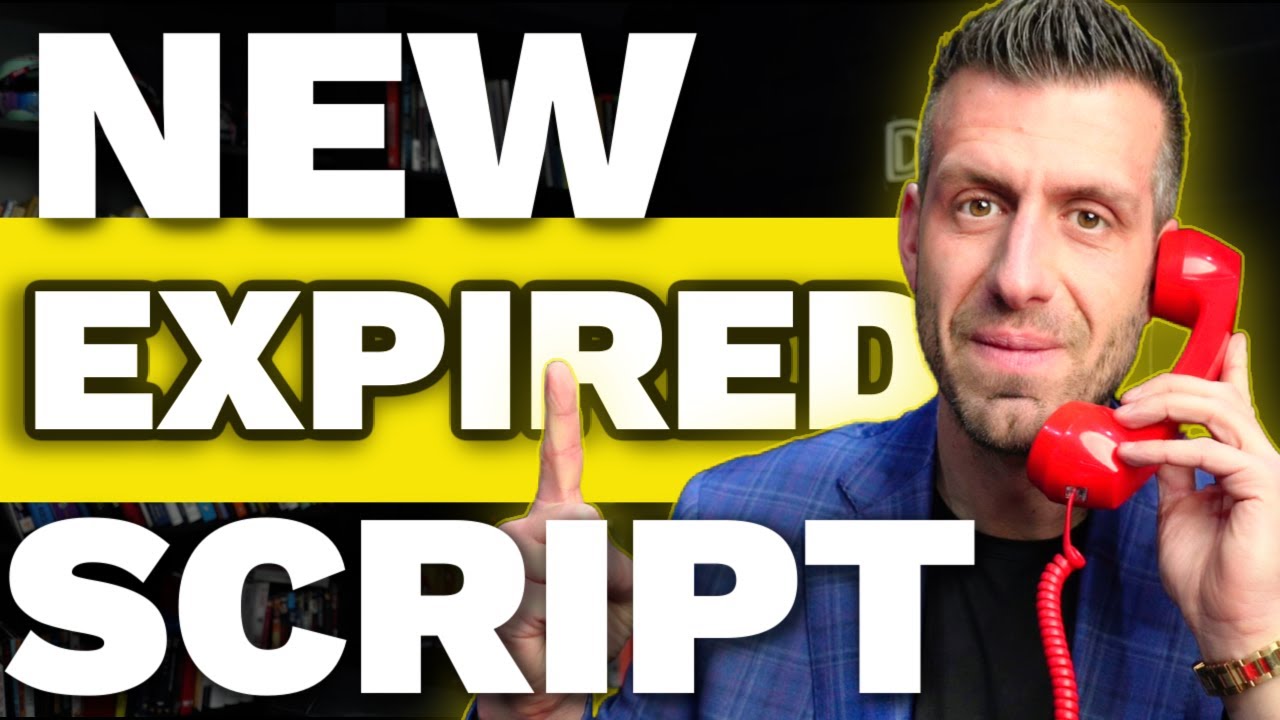
This "Expired Listing Script" ACTUALLY gets appointments

What this video is about

  • Source statement: the goal of the call is not to sell the house or the seller, it is to earn one appointment. Everything in the script bends toward "would you be totally opposed to inviting me over."
  • The open is a permission-based pattern interrupt: identify yourself as an agent and hand the seller an easy exit ("before you hang up") before you ask anything. Giving them permission to end the call is what keeps them on it.
  • The engine of the call is diagnosis, not pitching. Asher asks why the seller thinks the home did not sell, and the seller narrates their own frustration. In his words, "they're going to sell me on the pain."
  • The sequence surfaces two pains in order: the previous agent went quiet after listing, and the family needs more space (a fourth kid on the way) but dreads repeating the whole ordeal.
  • The close is a take-away framed as the seller's decision: "I don't know if it would make any sense for us to work together... at the end of our appointment we can decide." Low pressure, and it makes the seller argue for the meeting.
  • The debrief's real lesson: the script only works through delivery. Brandon: "you can't just hold up the script and read it." Asher has "internalized the why behind the what."

The format

This is a coaching interview, not a lecture. Brandon Mulrenin (real-estate sales coach) interviews a top-producing agent he calls Asher, who first explains his framework and then role-plays a full expired-listing call with Brandon playing the homeowner.

Context at 00:08: the two-person split-screen format for the whole video. Left is coach Brandon Mulrenin; right is the practitioner, Asher. There are no on-screen slides or script overlays at any point, so every technique below is spoken, not shown.

The framework, before the words

Source statementbefore demonstrating the script, Asher names the strategy in order. [00:09-00:46]

  1. Pattern interrupt. Identify yourself as an agent immediately, then give them permission to end the conversation before it starts. His claim: this spikes curiosity and makes them more open to talking.
  2. Ask a couple of questions, but aim them precisely. Not "why didn't it sell" as fact-finding, but "why do they think it didn't sell." Source statement: "if I know that, then I'm able to potentially add value to them."
  3. Let the pain surface on its own. Source statement: "if I can figure out why they think it didn't sell, they're going to sell me on the pain, and then all I have to do is push on that a little bit and then help them get to where that pain isn't there anymore."

Inferencethe whole design assumes the seller trusts their own words more than the agent's. So the agent's job is to ask the question that makes the seller state the problem, then position the appointment as the path out of it.

The seven-beat call

Below is the role-play, broken into the beats Asher runs. Quotes are transcribed from the call. [00:46-04:11]

Context at 02:45: the role-play in progress. Brandon plays the expired-listing homeowner (phone to ear); Asher runs the script live. This is the practice method the whole video is teaching, rehearsing the call out loud until the delivery is automatic.
  1. Permission-based open. "Hey, this is Asher, I'm a realtor, and listen, before you hang up, I was hoping to ask you a quick question about the home for sale. Would that be okay?" 00:46 The exit ("before you hang up") comes before the ask.
  2. Availability check. "I saw it came off the market unsold, and I didn't know if you had sold it privately or if it might still be available." Confirms the opening without assuming, and gets the seller talking.
  3. Diagnose the first pain: the old agent. "When your agent was updating you each week and sharing feedback with you, did they share a strategy of why it hadn't sold and what they were planning to do?" The seller answers: after listing "the communication kind of just disappeared." 02:17
  4. Surface motivation. "Had it sold, were you guys planning to buy something locally or looking to relocate?" The seller: "the plan was to get something bigger." 02:39
  5. Deepen the why. "Your home looks great and it's in a great area, I'm just shocked you're even considering selling it. Why?" This pulls out the real driver: a growing family, a fourth child on the way, and a wish to avoid "all these agents calling" and the whole ordeal again.
  6. Reframe the ideal outcome. "If you got an offer with terms you liked, a price that made sense, and you didn't need to worry about all the showings, and it was cleaner and easier and you knew what was going to happen, is that something that would be a problem?" The seller: "that's what we want to have happen." The agent has the seller agree to the outcome before asking for anything.
  7. Take-away appointment close. "I don't know if it would make any sense for us to work together, we've never met, I haven't seen your home, but would you be totally opposed to inviting me over one day this week?" Then the payoff: "when I'm there I can share a strategy that's helped our clients sell for top dollar and get it done quickly without the stress of showings, and at the end we can decide if working together makes sense or not, because you wouldn't consider hiring me unless you felt I could actually get your home sold." 04:11

Why it works: the seller argues for the meeting

The mechanics under the beats

  • "Totally opposed" is a low-pressure agreement frame. It is easier to say "no, I'm not opposed" than to say "yes" to a stranger, so the phrasing lowers the cost of agreeing.
  • The take-away ("I don't know if it would make any sense for us to work together") removes the pushy-salesperson threat, which makes the seller supply the reasons to meet instead of resisting them.
  • The reframe in beat 6 gets a yes to the outcome first. By the time the appointment is asked for, the seller has already said the calm, showing-free sale is exactly what they want.
  • The appointment, not the listing, is the only thing being closed. Source statement in the debrief: there is too much strategy in the call to unpack in one sitting ("we'll be here a couple hours"), which is the point, the call sells the meeting, the meeting sells the representation.

Delivery over words

Source statement (debrief, [04:34-05:06]): Brandon tells anyone watching to "go back, rewind, and listen to Asher, not just the words," because "you can't just hold up the script and read it, it's all about the delivery." His closing line: it is clear Asher has "totally internalized the why behind the what." 05:06

Inferencethe transferable skill is not the wording, which is short and simple, but the pacing, the calm, and knowing why each question is asked so it can be delivered as a real conversation rather than a recital.

Tools and resources

Resource Role in this playbook Where used Link
Video sourceFull framework explanation and role-playEntire playbookhttps://youtu.be/X5_tNM4hI-E
Brandon Mulrenin (channel)Real-estate sales coaching, the "Reverse Selling" methodHost and framinghttps://www.youtube.com/@BrandonMulrenin

Claims to verify

  • "This script actually gets appointments" is a channel claim illustrated by one scripted role-play with the coach playing a cooperative seller. No conversion rate, call volume, or appointment-set rate is given. Real expired-listing calls include hang-ups, hostility, and Do-Not-Call constraints not shown here.
  • Expired-listing cold calling is regulated. In the United States, the federal Do-Not-Call registry and state telemarketing rules restrict calling FSBO and expired numbers; verify DNC scrubbing and consent rules before applying this at scale. The video does not mention compliance.
  • "Giving permission to end the call spikes curiosity and keeps them on" is presented as experience, not data. Treat it as a testable technique, not a proven rule.
  • The seller's answers (agent went quiet, fourth kid on the way) are scripted to feed the pain-diagnosis method. A live call will not volunteer pain this cleanly; the skill is asking the follow-up that gets there.
  • Speaker name "Asher" is transcribed from audio and not confirmed on screen (no lower-third caption appears in the video).

Glossary

  • expired listing: A home that was listed for sale but came off the market unsold when the listing agreement ended; a common prospecting target because the owner still wants to sell.
  • FSBO: For Sale By Owner, a seller marketing their home without an agent; the other classic cold-call target alongside expireds.
  • cold call: An unsolicited sales call to someone who has not asked to be contacted.
  • pattern interrupt: An unexpected opening move that breaks the listener's automatic "no thanks" reflex to a sales call, buying a few seconds of real attention.
  • permission-based opening: Handing the prospect an explicit exit up front ("before you hang up") so staying on the call feels like their choice, which paradoxically keeps them on it.
  • curiosity spike: Deliberately raising an open question in the prospect's mind so they stay engaged to hear the answer.
  • pain-based selling: Guiding the prospect to state their own problem in their own words, then positioning your offer as the relief, rather than pitching features.
  • discovery questions: Questions whose job is to surface the prospect's situation and motivation, not to inform the seller.
  • reframe: Restating the situation so the prospect sees the desirable outcome (a clean, showing-free sale) as already agreed before any ask.
  • take-away close: Deliberately underselling the fit ("I don't know if it would make sense for us to work together") so the prospect supplies the reasons to proceed instead of resisting a hard push.
  • negative reverse: The broader technique behind the take-away, agreeing with or voicing the prospect's possible objection so they argue the other side.
  • "totally opposed" frame: Phrasing the ask as "would you be totally opposed to X" so a low-commitment "no, I'm not opposed" becomes the yes.
  • appointment setting: Making the single goal of the call a booked meeting, not a sale or a listing agreement.
  • objection handling: Responding to a prospect's resistance; here it is mostly pre-empted by the reframe and take-away rather than answered head-on.
  • top dollar: Real-estate shorthand for the highest achievable sale price, used as the appointment's promised payoff.
  • delivery: How the script is spoken (pace, tone, calm, timing); the video's thesis is that delivery, not wording, decides whether the call works.

Personal recommendations

A reusable discovery-call skeleton for Alexana sales conversations

Source
00:09 and 04:11
Demonstration
permission open, then questions that make the prospect state their own pain, then a reframe to the desired outcome, then a low-pressure ask for the next step.
System value
the same shape fits an agency discovery or sales call: open with permission, diagnose the prospect's real problem in their words before pitching anything, reframe to the outcome they want, then ask for the next meeting rather than the sale. This aligns with the standing note to stop selling after the close and ask before explaining.
Proposed form
a short call-structure reference (one page) Anthony can keep for his own calls
Target project
Personal (or Alexana sales enablement)

A "delivery over script" training asset for clients who do outbound

Source
04:34
Demonstration
Brandon's point that reading the script fails and only an internalized "why behind the what" lands, illustrated by a full role-play.
System value
for any client whose team makes sales or appointment-setting calls (real estate, home services, agencies), a "rehearse the why, don't read the words" module plus a role-play template could be a differentiated deliverable.
Proposed form
a training one-pager or short script template, only if a current client has an outbound calling motion
Target project
Client work (only where an outbound-calling client exists)

Appointment-setting message templates built on the take-away frame

Source
03:55
Demonstration
"would you be totally opposed to inviting me over one day this week" as a low-pressure ask that gets a yes.
System value
the "totally opposed" and take-away phrasing translate into SMS/email booking copy inside a GHL-style automation, low-pressure language that tends to book better than a hard "book now."
Proposed form
a small library of booking-message variants to A/B test, if and when a client automation needs appointment-setting copy
Target project
Client automation work (GHL), on demand

Take this with you

Save the playbook to read later, or hand the raw notes to your favorite AI.

What's this?

The Markdown file (a .md file) is a plain-text copy of this whole playbook, written in the simple format AI chat tools read best. It keeps the headings, links, timestamps, and captions and drops all the page styling. Think of it as the raw notes behind this page, ready to hand to an assistant.

To use it, download the file and drag it into ChatGPT, Claude, or any AI chat (or just paste the text in), then ask for what you want: “Summarize this into a one-page cheat sheet,” “Turn these steps into a checklist I can follow,” or “Quiz me on the key ideas.” Because the file is already structured, the assistant works from the real content instead of guessing.