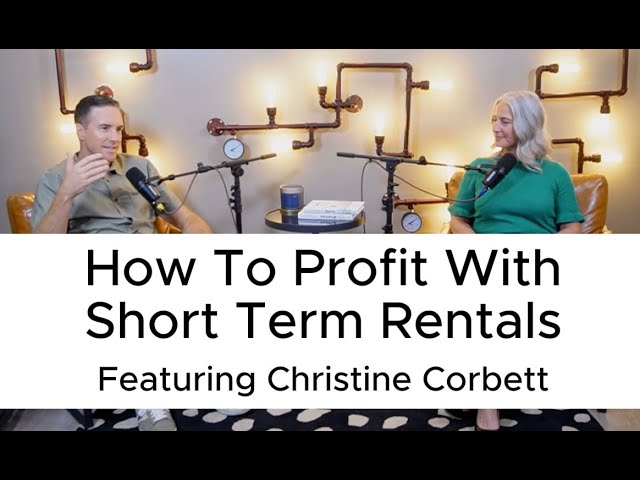
Source statement: profit is mostly decided before you buy. The manager wants to be on a call with the investor and their agent before the MLS search even starts, to steer them toward homes that actually perform, not just homes that are a good buy.
Amenities drive nightly rate and occupancy. A pool is close to mandatory in the valley; a hot tub raises revenue by about 15 to 25 percent; heated pools, saunas, EV chargers, pet-friendliness, and a dedicated workspace each nudge demand.
The city name is a pricing input by itself. A Scottsdale address commands a premium in both acquisition cost and nightly rate; nearby cities (Cave Creek, Fountain Hills, Mesa, Gilbert) can perform well but lack the Scottsdale draw.
"Profit" is not always cash flow. Some owners optimize for offsetting a mortgage, personal vacation use, or holding an appreciating asset, so the goal has to be defined before criteria are set.
The buy box she coaches: no HOA (they can amend to 30-night minimums), no diving board (costly to heat), more bedrooms (more heads and beds means more occupancy and revenue), and location that gives guests a reason to book.
Arizona compliance is real and city-specific: a short-term rental license plus a transaction privilege tax (TPT) number, good-neighbor letters (Phoenix requires certified-mail proof), and landline requirements in Paradise Valley and Carefree. Her firm charges 20 percent of gross nightly rents and handles this onboarding.
The core idea: decide profit before you buy
Source statementthe manager's wish is to reach investors before they start searching, because owners who pick the right property up front profit, and owners who don't, struggle. She wants a call before the MLS search is even set up, to understand where the investor is coming from and guide both them and the agent on where to look. 01:00-01:18
Context at 00:03: the format is a studio interview. Phil Sexton (host, a licensed real-estate agent) interviews Christine Corbett, who runs a short-term-rental management company with about 140 doors in Arizona. There are no property clips or on-screen data anywhere in the video, so every fact below is spoken.
Inferencethe whole pitch is that a generalist agent optimizes for "a good house to buy," while a rental specialist optimizes for "a good house to rent nightly," and those are different filters. Getting the specialist in before the search is the edge.
Amenities that move revenue
Source statementwhat performs is a home with a lot of amenities. In the valley a pool is needed; many guests come from cold, snowy parts of the country to enjoy the outdoors. Beyond the pool: 01:29-02:25
A hot tub increases revenue by about 15 to 25 percent.
A heated pool is very popular, especially in winter when much of the visitor traffic arrives; gas heating is preferred over electric, and deep pools (8 to 9 feet) are expensive to heat.
If there is no pool heater, a sauna pairs with a cold "polar plunge" pool.
A backyard guests can sit in, and eye-catching features like a water slide, help the listing stand out in photos even when they are not a searchable filter.
More bathrooms, ideally one per bedroom or bedroom access to one, lift popularity and therefore occupancy and revenue.
A gym or fitness room, an EV charger (a filterable amenity), pet-friendliness (about 10 percent of rentals allow pets), and a dedicated workspace or small office each add demand. She notes the EV charger and similar "checkable" amenities move the needle, but "not a ton."
Inferencetwo categories are in play. Filterable amenities (pool, hot tub, EV charger, pets) win the search-filter game; photogenic ones (water slide, styled backyard) win the click once a guest is browsing. Put the differentiating feature in the first few photos.
City and location: the Scottsdale premium
Source statementthe city name matters. Scottsdale is the big draw; some buyers are priced out of it and go to Cave Creek, Fountain Hills, Mesa, or Gilbert, which can be great but lack the Scottsdale address. Acquisition cost changes with the city name, and so does the rental income. 04:40-05:20
Within a city, micro-location matters too: backing to a park rather than a freeway, walkability, shopping, and views all help. She cites homes in the Boulders in far north Scottsdale, far from everything but beautiful, with hiking, which attract a different guest than Old Town Scottsdale near events and nightlife. The same guest might book the remote, scenic home one trip and the Old Town home the next, for different reasons. 09:51-10:43
The money: fees, down payment, and what profit means
Source statementher company charges 20 percent of gross nightly rents to manage. They have about 140 doors in Arizona and a little over 100 in Galveston, Texas. 05:49-06:04
The host frames the real questiongiven an investor's budget, is it realistic to cash-flow positive on a 10 to 20 percent down payment after paying management. Her answer reframes the goal. 05:20-06:16
Source statementthe answer is not always cash flow. Some owners bought to use the place for vacations and just want expenses covered; some hold it as the kids grow up and later decide to increase revenue or sell and buy elsewhere; some simply want to reduce their out-of-pocket, for example turning a 4,000-dollar-a-month cost into a 3,000 to 4,000-dollar offset. 06:16-07:05
Inference"profit" has to be defined before criteria are set. A pure cash-flow buyer, an expense-offset buyer, and a use-plus-hold buyer will each want a different property, city, and amenity mix.
Personal use and taxes
Source statementon how much an owner can use the property personally versus renting it, she explicitly defers to a tax accountant or financial advisor, because she is a licensed real-estate agent, not a tax professional. There are rules around personal-use days, and they depend on the owner's or partnership's goals. 07:13-07:43
Source statementshe has heard of owners who used a property more than allowed, and the IRS pushed back; they had to prove that some of that time was work, not use, by showing things like Home Depot receipts for repairs. 07:53-08:24
The buy box: what to require and avoid
Source statement, her top criteria beyond a pool (preferably not a diving pool): 08:24-09:45
No diving board or deep diving pool, because it is expensive to heat.
No HOA. There is usually no language in the CC&Rs restricting short-term rentals, but an HOA can amend its rules; she has seen an HOA switch to a 30-night minimum (which pushed an owner to leave her firm), then later revert. She notes HOAs tend to amend toward harder, not softer, rules. In her world a short-term rental means a stay of 2 to 29 nights.
More bedrooms. More "heads and beds" means higher occupancy and a higher nightly rate.
Location that gives guests a reason to book (views, walkability, proximity to what a guest wants).
City rules and compliance
Source statementthe municipalities have broadly similar ordinances, but the details differ by city, and her firm handles the paperwork during onboarding. 11:54-14:16
Context at 12:00: the compliance portion of the interview. This is spoken guidance, not a document on screen, so treat the specifics below as the manager's account to verify against current city rules.
Scottsdale requires "good-neighbor letters" to surrounding homes; the letter must carry a short-term-rental license number and a TPT (transaction privilege tax) license number, both applied for before the letter goes out. A TPT license takes about 48 to 72 hours. Scottsdale's short-term-rental license is about 250 dollars a year.
Phoenix also requires the good-neighbor letter, plus proof it was sent by certified mail; her firm sends the city the receipts and TPT number during onboarding.
The good-neighbor letter carries an emergency contact so complaints go to the manager rather than the city. Scottsdale's police department has a dedicated short-term-rental division she describes as a helpful resource.
Paradise Valley and Carefree require a landline in the home (Carefree, a landline on every level). Carefree also requires a home inspection before it will authorize the TPT and short-term-rental license.
Operations: channels, data, and service
Source statement on distribution and running the properties: 14:16-18:27
About 80 to 90 percent of reservations come from Airbnb and VRBO; the rest from booking.com, Google Travel, and the direct website. Software syncs availability across all channels and feeds housekeeping scheduling; the firm uses its own housekeepers.
Before an owner makes an offer, the firm provides a free revenue estimate: a yearly high and low, a month-by-month breakout, and an occupancy figure, at no charge, as a way to earn the business.
On data tools: owners can use AirDNA for Airbnb-style performance data, but AirDNA wraps all fees into its final number, so figures can be inflated; she recommends checking AirDNA's data against a professional manager's numbers. The firm also uses tools that show what other property managers charge nightly.
Welcome or concierge touches (cookies, slippers, a monogrammed robe, coffee) do not raise the nightly rate but are memorable and can protect a review. Bad reviews are taken seriously: they reach out to the guest to learn what could be better and to train staff, and they prefer to hear about problems during the stay. Inspections happen after every reservation, which also catches damage (for example, 150-dollar towels that go missing).
Tools and resources
Resource
Role in this playbook
Where used
Link
Video source
Full interview on profiting from Arizona short-term rentals
Entire playbook
https://youtu.be/woS7cpaWOaA
StayPorter (the manager's firm)
The short-term-rental management company in the interview
Fees, compliance, operations
https://stayporter.com
AirDNA
Third-party short-term-rental performance data
Data and estimates section
https://www.airdna.co
Airbnb / VRBO
The two channels driving 80 to 90 percent of bookings
Operations
https://www.airbnb.com
Arizona TPT (transaction privilege tax)
State tax license required for short-term rentals
Compliance
https://azdor.gov/transaction-privilege-tax-tpt
Claims to verify
All figures are one manager's account in a promotional interview, not audited data: the 15 to 25 percent hot-tub lift, the 20 percent management fee, the 250-dollar Scottsdale license, the 48 to 72 hour TPT turnaround, and the 80 to 90 percent Airbnb/VRBO share should be checked before relying on them.
City rules change and vary. Good-neighbor-letter requirements, certified-mail proof, landline mandates (Paradise Valley, Carefree), Carefree's inspection, and the 2 to 29 night definition are stated for late 2025 and must be verified against each city's current ordinance and Arizona TPT rules before acting.
Personal-use and tax treatment is explicitly deferred to a tax professional in the video; nothing here is tax advice.
HOA behavior (the 30-night-minimum switch and reversion) is a single anecdote, not a rule; CC&Rs must be read per property.
The guest's name is stated as "Christine Corbett" early and "Christina" once near the end; treat the first name as uncertain. The firm is stayporter.com.
The Scottsdale acquisition-cost premium and city-by-city income differences are described directionally, without numbers; treat as qualitative.
Glossary
short-term rental (STR): A furnished home rented to guests for short stays; in this manager's practice, 2 to 29 nights.
TPT (transaction privilege tax): Arizona's tax on business activity, including short-term rentals; a TPT license number is required before operating and appears on the good-neighbor letter.
good-neighbor letter: A notice a short-term-rental operator sends to surrounding homes, carrying the rental license number, TPT number, and an emergency contact; some cities require proof it was sent.
CC&Rs: The covenants, conditions, and restrictions that govern a property inside a homeowners association, which may or may not limit short-term rentals.
HOA: Homeowners association; can amend its rules, for example imposing a minimum-night stay that kills short-term-rental use.
MLS: The multiple listing service agents search for homes; the manager wants to shape the search criteria before it is even set up.
occupancy: The share of available nights that get booked; a core driver of revenue alongside nightly rate.
nightly rate: The price charged per night; amenities, city, and location push it up or down.
gross nightly rents: Total nightly rental income before expenses; the base the 20 percent management fee is charged on.
cash flow: Rental income left after all expenses including management; one possible goal, but not every owner's goal.
acquisition cost: The purchase price plus buying costs; higher in premium cities like Scottsdale.
filterable (checkable) amenity: A feature guests can filter for in a booking search (pool, hot tub, EV charger, pets), so it affects whether a listing even appears.
heads and beds: Industry shorthand that more sleeping capacity (bedrooms and beds) supports higher occupancy and rate.
AirDNA: A third-party data service estimating short-term-rental performance; noted here as useful but prone to inflated figures because it folds in fees.
VRBO: A major vacation-rental booking platform; with Airbnb it drives most reservations here.
superhost: Airbnb's status badge for consistently high-rated hosts; the firm is the technical host on owners' behalf.
polar plunge: A cold-pool dip, pitched as an amenity when a pool is unheated and paired with a sauna.
EV charger: An electric-vehicle charging point at the property; a filterable amenity that adds some demand.
dedicated workspace: A desk or small office in the rental, an amenity for guests who work while traveling.
onboarding: The manager's process of bringing a new property into management, including licenses, TPT, and good-neighbor letters.
occupancy-driven revenue: The idea that features raising popularity raise occupancy, which raises total revenue.
Personal recommendations
1
A short-term-rental "buy box" checklist as a client lead magnet
the manager's pre-purchase criteria (pool, no diving board, no HOA, more bedrooms, location, filterable amenities) and her "talk to me before the MLS search" positioning.
System value
for a short-term-rental or property-management client, a one-page "will this property actually rent" checklist is a strong top-of-funnel lead magnet that also qualifies buyers, mirroring the free-estimate offer in the video.
Proposed form
a gated checklist or interactive scorecard, built only if an STR/PM client exists
Target project
Client work (STR or property-management vertical)
2
The free pre-purchase revenue estimate as a lead-generation offer
the firm gives a free yearly-high-low, monthly, and occupancy estimate before an owner offers on a property, explicitly "to get business."
System value
this is a clean value-first lead magnet pattern (give the expensive-feeling analysis free to start the relationship) that generalizes to many service clients, not just STR.
Proposed form
a positioning and funnel play documented for the marketing playbook; a landing-page offer for a relevant client
Target project
Marketing playbook / client funnels
3
An Arizona STR compliance reference as an SEO and trust asset
city-by-city rules (TPT license, good-neighbor letters, Phoenix certified mail, Paradise Valley and Carefree landlines, Carefree inspection).
System value
a well-sourced "Arizona short-term-rental rules by city" guide is exactly the kind of high-intent, citable content that wins AI-answer and search visibility for a PM or real-estate client, if one operates in this market.
Proposed form
an AEO-optimized reference article, verified against current city ordinances first (rules change)
Target project
Client content (only for an AZ real-estate/STR client)
Take this with you
Save the playbook to read later, or hand the raw notes to your favorite AI.
What's this?
The Markdown file (a .md file) is a plain-text copy of this whole playbook, written in the simple format AI chat tools read best. It keeps the headings, links, timestamps, and captions and drops all the page styling. Think of it as the raw notes behind this page, ready to hand to an assistant.
To use it, download the file and drag it into ChatGPT, Claude, or any AI chat (or just paste the text in), then ask for what you want: “Summarize this into a one-page cheat sheet,” “Turn these steps into a checklist I can follow,” or “Quiz me on the key ideas.” Because the file is already structured, the assistant works from the real content instead of guessing.